Funeral song writing is the process of crafting original, emotionally resonant songs that honor a loved one during a memorial service. Unlike selecting a playlist from existing tracks, writing an original funeral song gives you full control over the story, the words, and the feeling. Custom memorial songs capture specific anecdotes, inside jokes, and personal details that generic hymns simply cannot reach. Pulseblendstudios has built its entire mission around this idea: that every life deserves its own song, written from scratch and produced with care.
What do you need to start writing a funeral song?
The most important starting point is not a pen or a melody. It is memory. Before you write a single line, spend time gathering the details that made your loved one who they were.
Collect the raw material first:
- Specific memories: A Saturday morning ritual, a favorite phrase they always said, the way they laughed.
- Their personality: Were they funny, quiet, adventurous, or deeply spiritual? The song's tone should reflect who they actually were.
- Their passions: A love of gardening, country music, baseball, or cooking can anchor the entire song in something real.
- Sensory details: The smell of their kitchen, the sound of their voice, the color of their favorite chair.
These details are the difference between a song that moves people and one that simply fills silence. Custom memorial songs that include specific anecdotes and inside jokes create far more emotional resonance than generic funeral hymns. That specificity is what turns a song into a lasting keepsake.
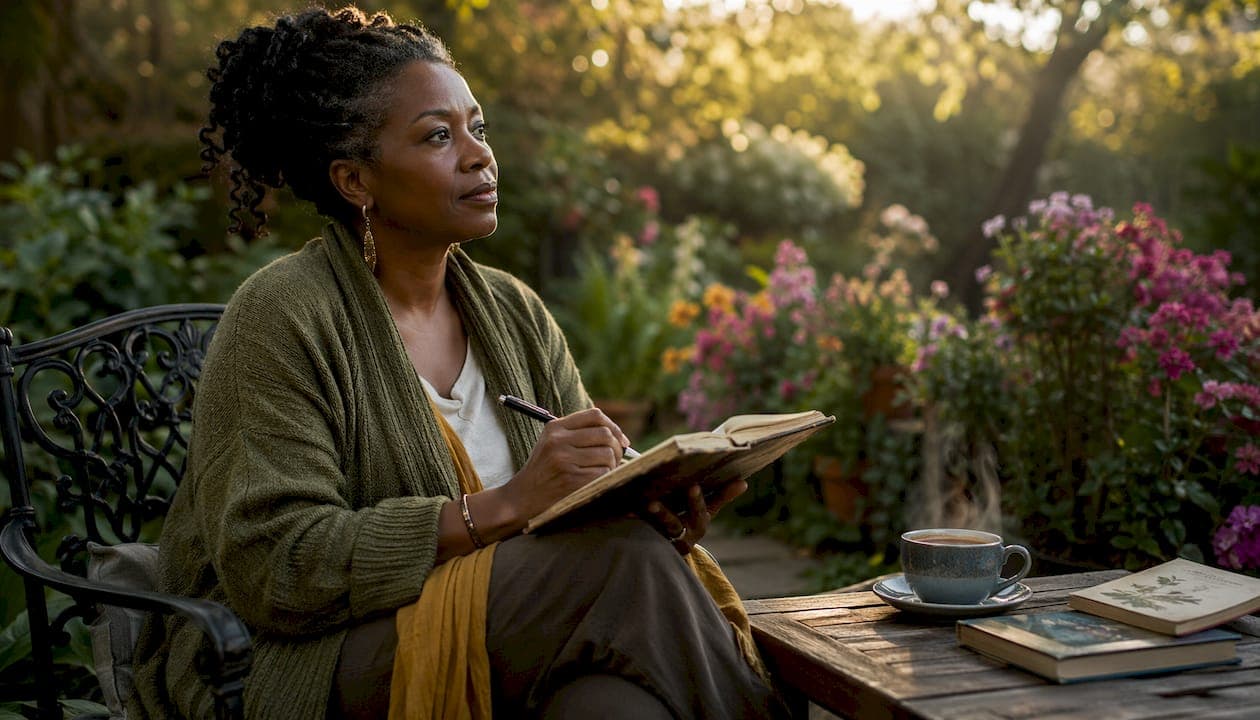
Choose a writing environment that feels safe. Some people write best at the kitchen table with coffee. Others need a quiet room, a walk outside, or a voice memo recorded in the car. There is no wrong setting. The goal is to lower your guard enough to let honest words come through.

Pro Tip: Record yourself talking about your loved one for five minutes before you write anything. Play it back and listen for the phrases that make you feel something. Those phrases belong in your song.
How do you structure a funeral song?
Structure is what turns a collection of feelings into a song someone can follow and feel. The good news is that memorial songs do not require complex songwriting knowledge.
Two of the most effective frameworks for writing a funeral song are:
- Then/now/always: Start with who they were in life ("Then you were here"), move to the present loss ("Now the chair sits empty"), and close with what endures ("Always your voice in the wind"). This structure mirrors the natural movement of grief.
- You were/you are: Shift from past to present tense to show that love does not end. "You were the one who stayed up late" becomes "You are the reason I still try."
- Anchor line chorus: Write one line that captures the heart of the person. Repeat it as a chorus. Build short verses around specific memories. Repeating the chorus provides comfort while the verses carry the story forward.
- Letter format: Write the song as if speaking directly to the person. "I still reach for the phone to call you" is more powerful than any abstract statement about loss.
- Legacy structure: Open with what they gave the world, move through a specific memory, and close with how their impact lives on in the people they loved.
Themes worth building around include love, remembrance, legacy, and hope. Avoid leaning too heavily on abstract ideas like "heaven" or "peace" unless those words meant something specific to your loved one. Concrete images always land harder than broad concepts.
Simple structures like then/now/always reflect the natural movement of grief and make lyric crafting accessible even for people who have never written a song before. That accessibility matters. You do not need to be a professional songwriter to write something true.
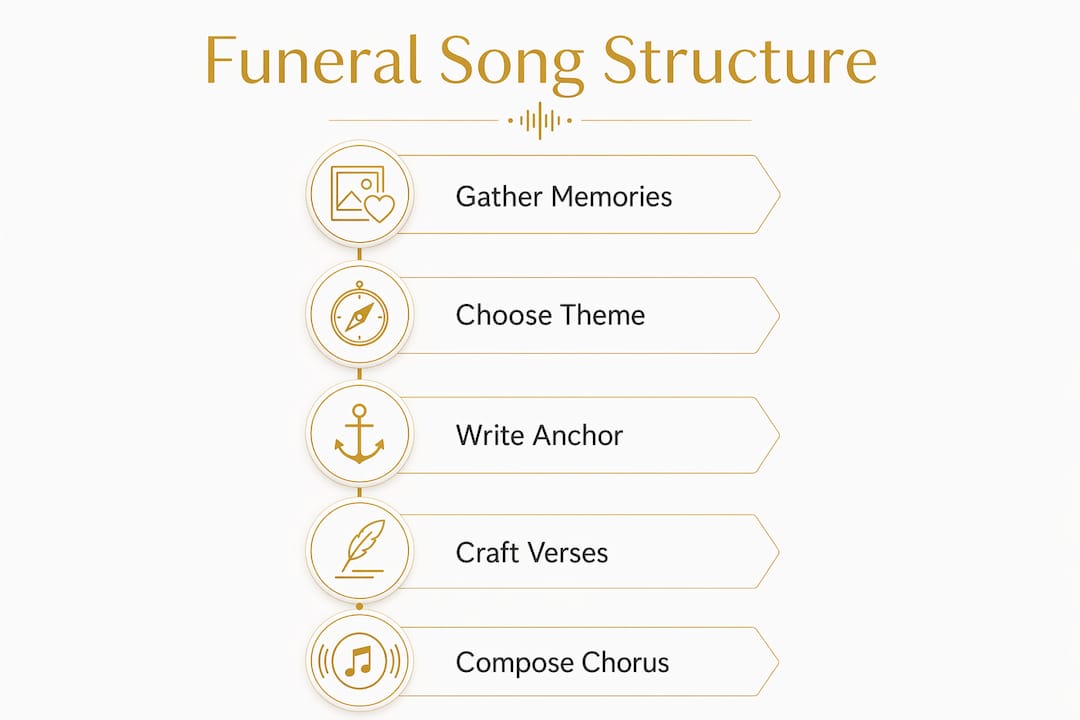
Pro Tip: Write your anchor line first. If you can finish this sentence, you have your chorus: "When I think of you, I think of ___." Everything else builds around that center.
How do you choose the right melody and tone?
Melody and tone are not afterthoughts. They shape how the words land in the room. A lyric about joy sung in a minor key will feel like grief. A lyric about peace set to an upbeat tempo will feel like celebration. Both can be right, depending on who you are honoring.
Consider these options when choosing your musical approach:
- Borrow a familiar melody: Non-musicians can set their lyrics to a well-known hymn tune or folk melody. Borrowing familiar tunes reduces performance anxiety and helps mourners connect immediately because they already know how to follow the music.
- Match genre to personality: A country song fits someone who loved Merle Haggard. A gospel arrangement honors a lifelong churchgoer. A soft acoustic piece works for someone who valued quiet and simplicity.
- Balance solemnity and celebration: The best memorial service songs hold both at once. They acknowledge the loss while honoring the life. A song that only mourns can feel heavy. A song that only celebrates can feel dishonest.
- Consider instrumentation: A solo piano creates intimacy. A guitar feels personal and warm. A full choir arrangement, like those used with "Abide With Me," the most-requested closing hymn for funeral services, creates a sense of communal release.
Tone is also about pacing. Slow songs give people space to cry. Mid-tempo songs give people space to breathe. Think about where in the service the song will appear and what emotional state you want to guide people toward at that moment.
How do you refine, perform, and share your funeral song?
A first draft is never the final song. Editing memorial lyrics is mostly about subtraction. Keep the lines that feel alive and cut the ones that feel like filler. Aim for about one minute if you are reading or performing at the service. That length holds attention without exhausting the reader or performer emotionally.
When it comes to performance, consider these options:
- Perform it yourself: If you can sing or play an instrument, performing the song yourself adds a layer of authenticity that no recording can match.
- Ask a musician friend: Someone who knew the deceased can bring genuine feeling to the performance. Brief them on the story behind the song before they rehearse.
- Use a recording: A professionally produced recording played during the service works beautifully for processionals, slideshows, or recessionals. Playing custom songs at key moments in the service weaves memory into the ceremony in a way that feels natural, not staged.
- Share printed lyric booklets: Give mourners the words so they can follow along or take them home. A printed lyric sheet becomes a keepsake.
"Strategically placing songs during a funeral service enhances the emotional flow, with pastoral songs opening and anthemic songs closing the ceremony. This arrangement provides structure and a meaningful emotional arc to the service." — London Choral Service
Sharing a recording after the service extends the song's life. Post it privately for family members who could not attend. Add it to a memory box. Pulseblendstudios can produce and distribute original memorial tribute songs globally across major streaming platforms when families want the song preserved permanently.
What are the common challenges in funeral song writing?
Grief makes writing hard. That is not a weakness. It is the nature of the work. The most common obstacle is sitting down to write and finding that the words will not come. This is normal, and it does not mean you cannot do it.
Writer's block during grief usually signals one of two things: you are trying to say everything at once, or you are trying to say it perfectly. Neither is possible. The solution is to write badly on purpose. Set a timer for ten minutes and write without stopping, without editing, without reading back. Let the mess come out. The real lines are usually buried inside it.
Avoiding clichés is the other major challenge. Phrases like "gone too soon," "in a better place," or "watching over us" are not wrong. They are just worn smooth from overuse. They no longer carry weight. Replace them with something specific. Instead of "gone too soon," try "I still expect to hear your truck in the driveway." Specificity is what makes a song feel true rather than generic.
Pro Tip: If you are stuck, try this prompt: "The thing most people didn't know about you was ___." The answer to that sentence is almost always the most powerful line in the song.
Accepting imperfection is the final step. A funeral song does not need to be a masterpiece. It needs to be honest. The people in that room will not judge the rhyme scheme. They will feel whether the song came from a real place.
Key Takeaways
Original funeral songs create deeper emotional resonance than generic hymns because they carry specific memories, real names, and the true personality of the person being honored.
| Point | Details |
|---|---|
| Start with memory | Gather specific anecdotes, phrases, and sensory details before writing a single lyric. |
| Use a simple structure | Frameworks like then/now/always or anchor line chorus make songwriting accessible for non-professionals. |
| Match melody to personality | Choose genre and instrumentation that reflect who the person actually was, not just what sounds solemn. |
| Edit by subtraction | Keep only the lines that feel emotionally alive; aim for about one minute of performed length. |
| Share beyond the service | Printed lyric booklets and recordings extend the song's impact for family members long after the ceremony. |
Why I believe writing a funeral song is worth the effort
By Vladimir Tokarev
People often tell me they are not writers. They say they could never write a song. Then they sit down, start talking about someone they loved, and within twenty minutes they have said three things more beautiful than anything I could have written for them.
The truth about funeral song writing is that it is not really about songwriting. It is about paying attention. It is about noticing what made one person different from every other person who ever lived and finding words for that difference. That act of noticing is itself a form of healing.
What I have seen, again and again, is that the families who write something original, even something rough and imperfect, leave the service feeling different from the families who played a playlist. There is a sense of having done something, of having participated in the honoring rather than just attended it. That feeling matters more than most people expect it to.
The other thing I will say is this: do not wait until you feel ready. Grief does not produce readiness. It produces urgency and fog in equal measure. Write in the fog. Write when it hurts. The song that comes out of that place will be the truest thing you ever put into words.
— Vladimir Tokarev
Pulseblendstudios: custom songs for the people you love
When writing a funeral song feels like too much to carry alone, Pulseblendstudios is built for exactly that moment.

Pulseblendstudios takes your stories, memories, and details and turns them into a professionally produced original song. You share what you remember. The team handles the lyrics, the melody, the production, and the final recording. Every song is written from scratch, matched to the genre and tone that fits your loved one, and delivered ready to play at the service or share with family. For families who want something permanent, Pulseblendstudios can distribute the song globally across major streaming platforms. Explore family legacy songs or browse custom song options to get started.
FAQ
What is funeral song writing?
Funeral song writing is the process of creating an original song that honors a specific person during a memorial service. It focuses on personal memories, real details, and the unique personality of the deceased rather than generic lyrics.
Do I need musical experience to write a funeral song?
No musical experience is required. Non-musicians can set original lyrics to a familiar melody or hymn tune, focusing entirely on the words and meaning rather than music composition.
How long should a funeral song be?
A funeral song performed or read at a service should aim for about one minute in length. That duration holds the room's attention without exhausting the performer or the audience emotionally.
Where in a service should a funeral song be placed?
Song placement shapes the emotional arc of the service. Pastoral songs work well at the opening, while anthemic or deeply personal songs land best as a closing recessional or during a slideshow tribute.
What if I cannot finish writing the song on my own?
Professional services like Pulseblendstudios can craft a complete, original memorial tribute song from the stories and memories you share, handling all production and delivery.
Recommended
- Family Legacy | Pulseblend Studios / Custom Songs & AI-Powered Music/ Personalized Music / Custom Songs That Preserve Memories
- Memorial Tributes | Pulseblend Studios / Custom Songs & AI-Powered Music/ Personalized Music / Custom Songs That Preserve Memories
- Military & Veteran Tributes | Pulseblend Studios / Custom Songs & AI-Powered Music/ Personalized Music / Custom Songs That Preserve Memories
- Wedding Songs | Pulseblend Studios / Custom Songs & AI-Powered Music/ Personalized Music / Custom Songs That Preserve Memories