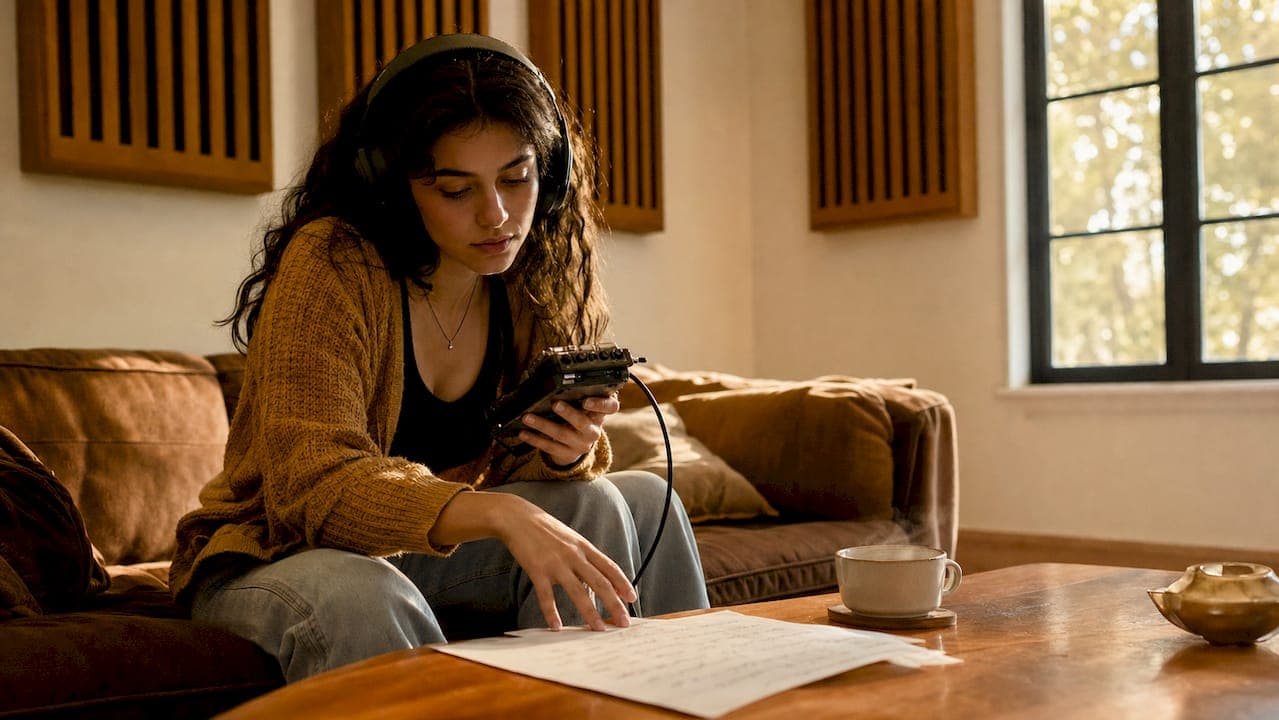
A podcast theme song is a short, licensed musical cue that establishes your show's identity before a single word is spoken. The best intro music delivers a recognizable hook within 5 seconds and runs between 10–30 seconds total. That window is not arbitrary. It reflects how quickly listeners decide whether to keep listening or skip ahead. Pulseblendstudios works with podcasters to build original, fully licensed theme music from scratch, so your show sounds like a brand from episode one.
1. What makes the best podcast intro music?
The best podcast intro music does one job above everything else: it makes your show instantly recognizable. A short melodic hook is more effective than a long, complex composition. Listeners remember a distinct rhythm or guitar phrase far longer than a 45-second orchestral build.
Four criteria separate professional intro music from generic background noise:
- Hook speed. Your theme must signal the show's identity within the first 5 seconds. If it takes longer, listeners have already mentally checked out.
- Length. The 10–30 second range is the industry standard. Anything longer delays your content and frustrates returning listeners.
- Frequency balance. Choose music that sits in the mid-to-high range so your voice cuts through cleanly without heavy audio editing. Avoid tracks with prominent lead vocals.
- Podsafe licensing. Royalty-free music is not the same as podsafe music. Only a podsafe license explicitly covers podcast distribution on platforms like Spotify and Apple Podcasts.
Pro Tip: Test your intro music by playing it back on earbuds at low volume. If the hook still registers clearly, it will work for commuters and casual listeners.
Genre choice should focus on function, not popularity. A track that sounds impressive in isolation may compete with your voice or confuse your audience about the show's tone.
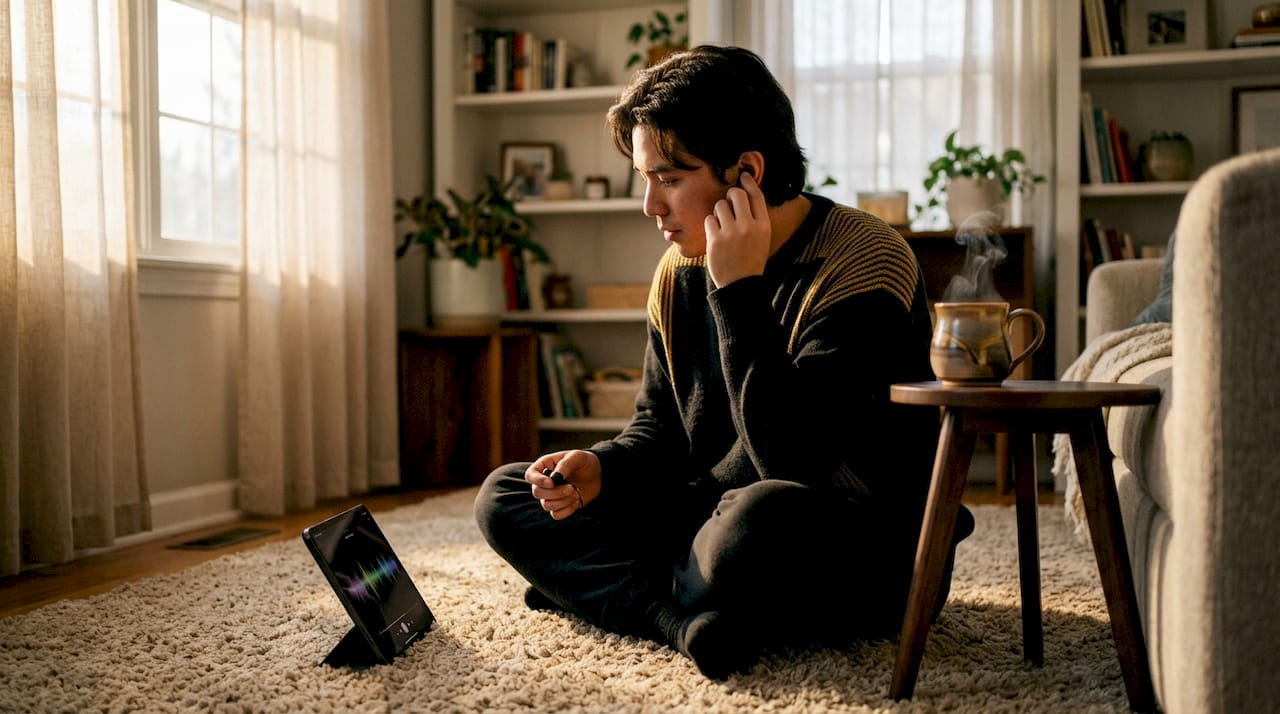
2. Top 10 podcast theme song styles for every show type
Matching your theme to your genre is not optional. Genre alignment directly shapes listener expectations and brand cohesion from the first second.
- Upbeat pop or electronic. Works for casual conversation shows, comedy podcasts, and lifestyle content. Think punchy synth stabs and a fast tempo that signals energy.
- Cinematic orchestral. The right choice for documentary-style or narrative storytelling podcasts. Strings and brass build emotional weight before the host speaks.
- Dark and minimal. True crime and suspense genres rely on sparse piano, low drones, or subtle percussion. Complexity undercuts the mood.
- Clean acoustic guitar. Personal finance, wellness, and self-help podcasts benefit from warm, approachable tones that feel trustworthy.
- Corporate electronic. Business and entrepreneurship shows often use crisp, neutral beats that project professionalism without personality overload.
- Lo-fi hip-hop. Education and study-adjacent podcasts use this style to signal a relaxed, focused environment.
- Sonic logo or jingle. Branded shows with strong visual identities often use a 5–8 second signature sound instead of a full theme. It functions like an audio logo.
- Jazz or blues-inflected. Culture, arts, and interview shows use this style to signal depth and sophistication.
- Ambient or atmospheric. Meditation, spirituality, and mental health podcasts use slow-building pads and soft textures to set a calm tone.
- Hybrid custom compositions. Shows with unique positioning often commission original theme music that blends two styles into something no stock library can replicate.
The style you choose communicates your show's personality before your audience hears your name. Get it wrong and you create friction. Get it right and it becomes part of your brand.
3. How to choose podcast outro music that finishes strong
Outro music is the last thing your listener hears. It shapes how they feel about the episode and whether they act on your call to action. Outro music runs 15–30 seconds in professional productions. That length gives you room for a voiceover, a sponsor mention, and a clean fade without rushing.
The most common mistake podcasters make with outros is choosing music that competes with their voice. Dense melodies and vocal hooks push listeners' attention toward the music and away from your final message. Your outro track should have open frequencies and a gradual fade.
Key selection criteria for outro music:
- Clean frequency space. Choose tracks with neutral mid-range tones so your voice sits on top without fighting the music.
- Fade-out structure. A natural fade signals closure and gives you editing flexibility for different episode lengths.
- Podsafe licensing. Your outro must carry the same distribution rights as your intro. Sponsor segments and CTAs within the outro are still part of the episode and must be covered.
- Tonal consistency. Your outro should feel like the natural end of your intro. A mismatch in style confuses listeners about your show's identity.
- Reuse across episodes. Pick an outro you can use for at least 50 episodes. Consistency builds recognition.
Pro Tip: Record your standard CTA script over your outro track before you commit to it. If you have to raise your voice or slow your speech to be heard, find a different track.
4. Podcast music licensing options explained
Licensing is where most podcasters make expensive mistakes. The terms "royalty-free" and "podsafe" are not interchangeable. Royalty-free means you pay once and do not owe ongoing royalties. Podsafe means the license explicitly permits podcast distribution on major platforms. A track can be royalty-free and still trigger a copyright claim on Spotify or Apple Podcasts.
Using unlicensed commercial music puts your entire back catalog at risk. Platforms can remove episodes, mute audio, or terminate accounts without warning. The financial and reputational cost of rebuilding a catalog is far higher than the cost of proper licensing from the start.
| License Type | Royalties Required | Podcast Distribution Covered | Platform Risk |
|---|---|---|---|
| Commercial (unlicensed) | Yes | No | Very high |
| Royalty-free only | No | Not guaranteed | Moderate |
| Podsafe licensed | No | Yes, explicitly | Low |
| Custom commissioned | No | Yes, fully owned | None |
Podsafe platforms like Thematic provide libraries with lifetime licensing that covers major podcast distribution platforms. Subscription plans remove per-episode royalty obligations entirely. The practical advantage is that you can publish to Spotify, Apple Podcasts, and YouTube without tracking individual usage rights.
Licensing documentation tied to each episode provides legal proof of podsafe usage. This protects creators from third-party claims and platform takedowns. Store your license records alongside your episode files. If a claim ever arrives, you need that documentation ready within hours, not days.
5. Matching your theme song to budget, audience, and goals
Budget shapes your options, but it does not determine your outcome. The right choice depends on where your show is in its lifecycle.
- Free options. Public domain music and Creative Commons tracks cost nothing but require careful license verification. Many free tracks lack the production quality that signals professionalism to new listeners.
- Subscription libraries. Monthly or annual subscriptions to podsafe music platforms give you access to hundreds of tracks with distribution rights included. This works well for shows in their first 25 episodes.
- Custom commissioned music. A custom podcast theme is the right investment when your show has a defined audience, a consistent publishing schedule, and a brand identity worth protecting. You own the master recording and no other show can use the same music.
Experienced podcasters shorten intros to 5–15 seconds after about 25 episodes. Early listeners tolerate longer intros because they are still learning the show. Returning listeners want to get to the content faster. Plan your theme song with this evolution in mind.
Audience demographics also drive style decisions. A show targeting professionals in their 40s responds differently to a lo-fi beat than a show targeting college students. Match the music to the listener, not to your personal taste.
Key takeaways
A podcast theme song works because it creates instant audio recognition, signals your show's tone, and protects your distribution when properly licensed.
| Point | Details |
|---|---|
| Hook speed matters | Your theme must signal the show's identity within the first 5 seconds. |
| Use the right license | Only podsafe licenses explicitly cover Spotify and Apple Podcasts distribution. |
| Outro music needs space | Choose tracks with open frequencies so your voice carries over the final message. |
| Shorten intros over time | After 25 episodes, trim your intro to 5–15 seconds to respect listener pacing. |
| Custom music removes risk | Commissioned themes give you full ownership and eliminate platform takedown exposure. |
What I've learned after years of watching podcasters get this wrong
The single most common mistake I see is podcasters treating their theme song as an afterthought. They spend weeks planning episode structure, guest outreach, and recording setups, then grab a free track from a stock site the night before launch. That track becomes the first thing every listener hears for the next three years.
The second mistake is choosing music based on what the creator likes rather than what the audience expects. I have watched technically excellent shows lose early listeners because the intro felt tonally wrong for the genre. A true crime show with a cheerful acoustic guitar intro creates immediate cognitive dissonance. Listeners do not always know why they feel put off. They just stop coming back.
Licensing diligence is the unglamorous part of this conversation, but it is the one that protects your work long-term. I have seen podcasters lose entire back catalogs because they used a track that seemed royalty-free but was not cleared for podcast distribution. Rebuilding that audience trust takes far longer than getting the license right the first time.
The best advice I can give is to treat your theme song as a brand asset, not a production detail. Commission it, document it, and protect it. If your show is worth building, it is worth a theme that no one else can use.
— Vladimir
Original theme music built for your podcast brand
Pulseblendstudios creates custom podcast theme music written from scratch for your show's specific tone, audience, and format. Every track is professionally produced, fully licensed for podcast distribution, and owned entirely by you.
No stock libraries. No shared tracks. No takedown risk. Pulseblendstudios uses AI-powered production tools combined with professional songwriting to deliver a theme that sounds like your show and no one else's. Whether you need a 10-second sonic logo or a full 30-second intro with an outro variation, the team builds it to your brief. Visit the custom songs page to see current packages and start the process.
FAQ
What is a podcast theme song?
A podcast theme song is a short, licensed musical cue, typically 10–30 seconds, that opens or closes a podcast episode and establishes the show's audio identity.
How long should a podcast intro be?
The standard length for podcast intro music is 10–30 seconds, with the host voiceover beginning within the first 5–8 seconds of the track.
What is the difference between royalty-free and podsafe music?
Royalty-free music means no ongoing royalties are owed, but it does not guarantee podcast distribution rights. Podsafe music explicitly covers distribution on platforms like Spotify and Apple Podcasts.
When should I commission a custom podcast theme song?
Commission a custom theme when your show has a defined brand, a consistent publishing schedule, and an audience you want to retain long-term. Custom music gives you full ownership and eliminates the risk of another show using the same track.
How do I protect myself from music copyright claims on my podcast?
Use only podsafe-licensed music and document each license tied to the specific episode it covers. Store those records alongside your episode files so you can respond to any platform claim immediately.
Recommended
- Pulseblend Studios / Custom Songs & AI-Powered Music/ Personalized Music / Custom Songs That Preserve Memories
- Quick Question? | Pulseblend Studios / Custom Songs & AI-Powered Music/ Personalized Music / Custom Songs That Preserve Memories
- Podcast & Creator Theme Music | Pulseblend Studios / Custom Songs & AI-Powered Music/ Personalized Music / Custom Songs That Preserve Memories
- Why a Custom Birthday Song Gift Lasts Longer | Pulseblend Studios / Custom Songs & AI-Powered Music/ Personalized Music / Custom Songs That Preserve Memories